

Latest Weather Blog
Painting the sky: the chemistry hiding inside Fourth of July fireworks
Related Story
As America gears up to celebrate its historic 250th birthday, many will head outdoors to enjoy spectacular fireworks displays, including WBRZ’s Annual Fireworks on the Mississippi. These colorful shows captivate crowds, young and old, but every single blast is actually an incredible feat of chemistry.
Shortly after a firework is lit, tightly-packed black powder explodes, launching it high into the sky. As the firework climbs, a time-delay fuse burns slowly inside. After just a few seconds, that fuse sparks the core, triggering a second explosion that blasts tiny chemical pellets called “stars” outward.
These stars can be packed into different patterns to create a variety of shapes in the sky, while the specific chemicals within them determine their vibrant colors.
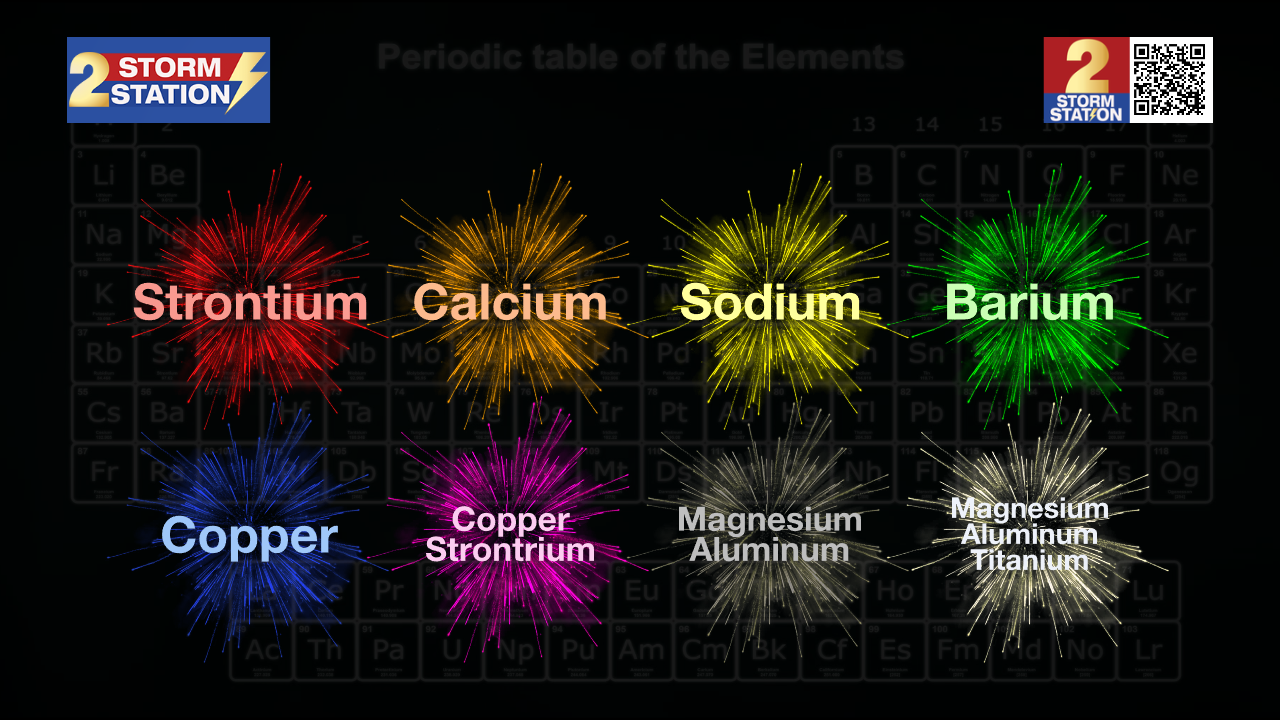
A variety of metal salts are used to paint the sky, which include strontium for red, calcium for orange, sodium for yellow, barium for green, and copper for blue. Purple fireworks are typically a mix of strontium and copper compounds, whereas white fireworks combine magnesium and aluminum compounds. These chemicals must burn to give off color, so oxidizers are added to fuel the combustion process. Additional binding chemicals hold everything together.
The Storm Station is here for you, on every platform. Your weather updates can be found on News 2, wbrz.com, and the WBRZ WX App on your Apple or Android device. Follow WBRZ Weather on Facebook and X for even more weather updates while you are on the go.
News

